2026 Best Cohesive Bandage Manufacturer for Global Buyers
Choosing the 2026 best Cohesive Bandage Manufacturer requires more than comparing prices or catalog photographs. Global buyers need dependable materials, consistent compression, and clear evidence of quality. A reliable manufacturer should explain its nonwoven fabric, cohesive coating, elasticity range, and packaging controls in practical terms. The roll should unwind smoothly, hold securely, and remove without leaving excessive residue. Small details matter. A loose edge can slow treatment during a busy clinic shift.
Experience should be visible in production records, not only in marketing language. Buyers should review batch traceability, inspection procedures, stability data, and relevant certifications before placing large orders. Factory audits, sample testing, and transparent communication can reveal how a supplier handles real production pressure. Ask about latex-free options, custom sizes, carton protection, and storage conditions. Documentation must match the delivered product.
No supplier is perfect.
A strong Cohesive Bandage Manufacturer should acknowledge limitations instead of promising flawless performance in every climate or application. Humidity, temperature, skin type, and wrapping technique can affect adhesion. This is where professional guidance becomes valuable. Manufacturers with experienced technical teams can recommend suitable specifications and explain test results without confusing buyers. They should also support complaint investigation and corrective action when problems appear. That honesty builds trust over time. For global purchasing teams, the best choice is not simply the lowest quotation. It is a manufacturer with repeatable processes, responsible communication, and evidence that its bandages perform consistently from the first shipment to the next. Some comparisons remain difficult. Buyers should keep questioning them.
What Is a Cohesive Bandage and How Does It Work?
What Is a Cohesive Bandage and How Does It Work?
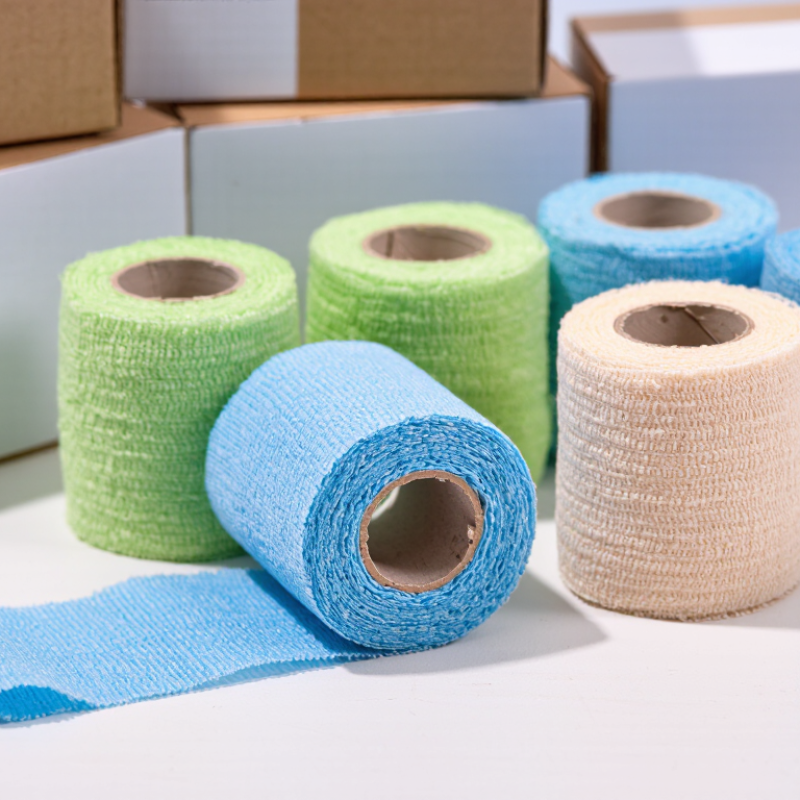
A cohesive bandage is an elastic wrap that sticks to itself, not directly to skin. Its woven or nonwoven fabric carries a light cohesive coating. When wrapped, the layers bond through gentle pressure and tension. This design helps secure dressings, support joints, and manage light compression without pins or clips. It usually removes cleanly from skin and hair. However, product performance varies with material, coating, and storage conditions.
Tips: Apply it smoothly, with moderate tension, and overlap each layer by about half its width. Check fingers or toes for warmth, color, and sensation after application. Loosen the wrap if numbness, swelling, or unusual pain appears. Do not cover damaged skin without suitable clinical guidance. Small mistakes matter here.
For global buyers, a dependable manufacturer should provide clear specifications and traceable quality records. Review stretch recovery, cohesive strength, roll length, edge stability, and packaging integrity. Practical testing should include temperature, humidity, and transport simulations. A wrap that performs well in a clean sample room may behave differently inside a hot warehouse. Ask for batch identification, inspection procedures, and relevant test reports. It is also wise to assess skin-contact materials and available latex-free options, rather than assuming every roll has the same profile. One detail is easy to overlook: excessive adhesive force can make application uncomfortable, while weak cohesion can cause slipping during movement. Reliable sourcing depends on balancing both.
Key Product Features Required by Global Buyers in 2026
Global buyers in 2026 expect cohesive bandages to perform reliably in busy clinical and first-aid settings. The material should wrap smoothly without sticking to skin, hair, or wound dressings. Consistent cohesive strength matters. A bandage that loosens after several hours creates avoidable work for caregivers. It should provide gentle compression while remaining breathable during extended wear. Latex-free construction can reduce allergy concerns across diverse markets. Buyers also look for clean tearing by hand, multiple widths, and strong edges that resist fraying.
Manufacturers should verify performance through documented testing, including adhesion, tensile strength, stretch recovery, and moisture resistance. Each production lot should remain traceable through batch numbers, inspection records, and clear expiration dates. Packaging needs to protect rolls from dust and humidity during long-distance transport. Small details matter, such as readable labels, multilingual instructions, and carton dimensions suited to warehouse handling. Not every market needs the same elasticity. That assumption can cause problems. Experienced suppliers should discuss climate, application, and user habits before confirming specifications. A practical sample trial may reveal issues that laboratory data misses. The roll may feel too tight after repeated wrapping. The printed label may also fade under humid storage. Reliable cooperation means identifying these weaknesses early, correcting them, and documenting the change.
How to Evaluate a Cohesive Bandage Manufacturer
2026 Best Cohesive Bandage Manufacturer for Global Buyers
How to Evaluate a Cohesive Bandage Manufacturer
Choosing a cohesive bandage manufacturer requires more than comparing prices. Grand View Research estimated the global wound care market at over USD 20 billion in 2023, with continued growth expected through 2030. This expansion attracts capable factories and inexperienced suppliers. Buyers should request ISO 13485 certification, recent audit records, and batch-level traceability. A certificate alone is not proof. Check its scope, expiry date, and issuing body.
Product evaluation must be practical. Ask for tensile strength, unwind force, cohesive performance, breathability, and residue testing. Test samples after storage in hot and humid conditions. The bandage should wrap smoothly, hold firmly, and remove without damaging skin. It should not shed fibers during stretching.
Packaging also matters. Verify seal integrity, sterilization claims, lot numbers, and clear instructions. The FDA’s Quality System Regulation emphasizes controlled production and documented corrective actions for applicable medical devices. Your supplier should explain both.
Small details reveal manufacturing discipline. Visit the facility if possible. Watch how operators handle rolls, gloves, and rejected materials. Ask whether latex, dyes, or adhesives vary between batches. An honest manufacturer will disclose limitations. That is valuable. I would distrust perfect answers, especially when test results lack dates, methods, or sample sizes. Independent laboratory testing remains worthwhile, even after factory approval. Mistakes can happen. A reliable supplier shows how they find and correct them.
Manufacturing Standards, Certifications, and Quality Control
2026 Best Cohesive Bandage Manufacturer for Global Buyers
A dependable cohesive bandage manufacturer should operate under ISO 13485:2016, not only general quality systems. The ISO Survey 2022 recorded more than 26,000 ISO 13485 certificates worldwide, showing the standard’s importance in medical-device supply chains. Certification alone is not enough. Buyers should inspect scope, renewal status, and actual production coverage.
Quality control should begin with incoming yarn, elastic fibers, pigments, and packaging films. Each batch needs documented checks for width, stretch, cohesive strength, unwind force, and skin-contact safety. ISO 14971:2019 supports risk-based controls, while ISO 10993 testing can help assess biological safety for prolonged skin contact. A practical audit should include sealed cartons, lot codes, retained samples, and traceable inspection records.
Small details matter.
A reliable plant can show test results beside the production line, not only in a sales file. Operators should verify roll tension and edge alignment during converting. Samples should remain stable after transport, humidity exposure, and storage.
The ISO Survey reflects certification activity, but it does not measure every factory’s daily discipline. That gap deserves attention. No manufacturer is flawless, and an impressive certificate can hide weak follow-up controls. Global buyers should review nonconformity reports, corrective actions, complaint trends, and independent laboratory results before approving long-term supply.
Global Sourcing, Customization, Pricing, and Supply Support
Choosing the best cohesive bandage manufacturer in 2026 requires more than comparing catalog prices. Global buyers need verified production experience, stable quality, and clear export support. A reliable supplier should explain material structure, elasticity, adhesive options, packaging, and batch testing without vague claims.
Global sourcing works better when communication is practical. Ask for factory photos, quality records, sample approval procedures, and recent production capacity. Samples matter. Check whether the bandage keeps compression after stretching, holds securely on skin, and remains comfortable during movement.
Customization may include width, length, colors, private packaging, carton marks, and customized labeling. Confirm minimum order quantities before final artwork. Small details matter.
Pricing should show the full calculation, including product cost, packaging, tooling, inspection, shipping terms, and payment conditions. The lowest quotation is not always economical. It may exclude testing or use inconsistent materials. Lead-time commitments should include raw-material preparation and peak-season delays. Supply support also means responsive communication, replacement handling, production updates, and document accuracy. No supplier is perfect. Buyers should record problems openly and review corrective actions instead of trusting polished presentations. A balanced evaluation combines samples, audits, technical answers, and landed-cost analysis before long-term purchasing decisions.