pic
Call us or Text us: 508-366-7600
Book Online

2026 Best Modern Aesthetics Products for Global Buyers?

In 2026, global buyers are looking beyond attractive packaging and quick promises. They want modern aesthetics products supported by clear evidence, practical performance, and responsible manufacturing. This guide explores skincare devices, LED systems, professional tools, barrier-supporting formulas, and other solutions shaping the international beauty market.

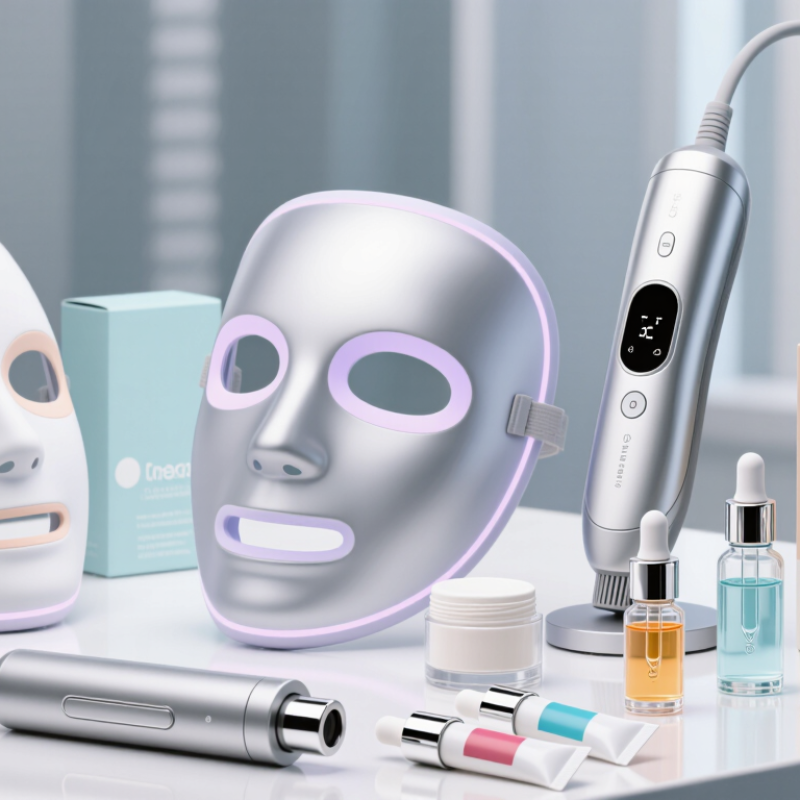
Product selection requires more than comparing prices. Buyers should review ingredient lists, electrical certifications, testing records, warranty terms, and supplier communication. A compact LED mask may look impressive, yet wavelength accuracy, eye protection, charging safety, and after-sales support matter more. A serum may claim visible results, but stability data and transparent usage instructions deserve closer attention. Details matter.

Regulations also vary across markets. Import requirements, labeling rules, product claims, privacy standards, and professional-use restrictions can differ between regions. Responsible suppliers explain these limits instead of encouraging risky shortcuts. That is a useful trust signal. However, no product is perfect, and even well-designed devices may perform differently across skin types, routines, and climates. Buyers should test carefully, document outcomes, and remain open to disappointing results. Marketing can move faster than evidence.

This overview is designed for distributors, clinics, retailers, and informed consumers seeking reliable purchasing decisions. It combines market awareness with practical evaluation criteria, while recognizing that innovation still needs independent verification. The best choice may not be the newest product. It may be the one that performs consistently, complies locally, and earns trust over time.

2026 Best Modern Aesthetics Products for Global Buyers?

Modern Aesthetics Products: Definition, Scope, and 2026 Market Context

Modern Aesthetics Products: Definition, Scope, and 2026 Market Context

Modern aesthetics products are regulated tools supporting appearance-focused clinical treatments. The category spans energy-based devices, professional skincare, sterile consumables, and prescription injectables. It also includes diagnostic accessories, treatment software, training materials, and maintenance services. The word modern is often misused. Clinical evidence matters more than glossy design.

In 2026, global buyers face strong demand but uneven market data.

The International Society of Aesthetic Plastic Surgery reported 19.1 million non-surgical aesthetic procedures worldwide in its 2023 survey, released in 2024. Injectables, skin treatments, and energy procedures remained major activity areas.

Grand View Research estimated the global medical aesthetics market at about USD 19.4 billion in 2023, with projected growth through 2030. Estimates differ because report definitions and regions differ. That uncertainty deserves attention.

For buyers, product scope should include safety records, training, traceability, and post-market surveillance.

A device file should show intended use, maintenance intervals, electrical specifications, and clinical validation. Skin-tone testing also deserves closer review, especially for energy-based equipment.

For topical products, check ingredients, expiry dates, batch numbers, and storage temperatures. For injectables, verify authorization, cold-chain controls, and qualified clinical use in the destination market.

A practical weakness remains: growth forecasts can hide service costs, local registration delays, and inadequate operator training. A lower purchase price may become expensive after installation.

Key Product Categories in Modern Aesthetic Care

Modern aesthetic care is moving beyond single-product purchasing. The ISAPS 2023 International Survey, published in 2024, recorded 19.1 million nonsurgical procedures worldwide. That figure highlights demand for injectables, skin-resurfacing systems, body-contouring equipment, and professional skincare. Global buyers should examine clinical evidence, treatment indications, and local regulatory clearance before comparing prices. Attractive packaging is not proof of performance.

Injectable products remain important, but they require trained operators, controlled storage, and clear batch traceability. Energy-based devices need accurate wavelength, temperature, and safety documentation. Professional skincare should support barrier repair, hydration, pigmentation management, and sun protection. Post-procedure products also deserve attention, because redness and sensitivity can influence patient satisfaction. In practice, small details often decide whether a treatment feels safe.

The 2024 Global Wellness Institute report valued the wider wellness economy at 6.3 trillion dollars in 2023, showing strong consumer interest in preventive and appearance-related care. However, wellness demand can encourage exaggerated claims. Buyers should request peer-reviewed studies, adverse-event data, warranty terms, and operator training materials. Product categories overlap, and some evidence remains incomplete. That uncertainty is uncomfortable, but ignoring it creates greater commercial and clinical risk.

2026 Best Modern Aesthetics Products for Global Buyers

The chart compares major modern aesthetic product categories by typical clinical longevity. Values represent the approximate midpoint of commonly reported treatment-duration ranges and are not a market-share ranking. Actual results vary by formulation, treatment area, patient factors, and local regulatory requirements.

Safety, Quality Standards, and Regulatory Requirements

2026 Best Modern Aesthetics Products for Global Buyers?

Safety, quality standards, and regulatory compliance should guide every aesthetics purchase. A polished package proves very little. Buyers should verify manufacturing controls, clinical evidence, biocompatibility data, sterilization records, and packaging integrity. ISO 13485 certification can support confidence, but it does not replace local approval. Requirements differ across countries. Check the responsible authority before placing an order.

In practical sourcing, traceability matters from factory to treatment room. Request batch numbers, expiry dates, instructions for use, storage temperatures, and complaint procedures. Labels should match approved claims and local language rules. Products requiring professional administration need clear training requirements. A certificate alone can create false confidence. I still find that buyers sometimes review documents too late, after payment or shipment. That delay can create avoidable regulatory and safety problems.

Tips: Build a document checklist before contacting suppliers. Confirm authorization with the relevant national regulator. Ask for recent test reports, not recycled files. Inspect seals, cartons, and temperature indicators upon delivery. Keep purchase records and batch photographs. Use qualified healthcare professionals for product selection and administration. When evidence is incomplete, pause the purchase. A lower price is not a safety strategy.

How Global Buyers Compare Suppliers, Costs, and Product Performance

2026 Best Modern Aesthetics Products for Global Buyers?

Global buyers compare suppliers beyond the quoted unit price. In real purchasing work, I request samples, technical files, production photos, and recent quality reports. A responsive supplier matters, especially when specifications change during approval. Ask how materials are sourced and how each batch is recorded. Small gaps here can become expensive problems later.

Cost comparison should include shipping, duties, packaging, payment terms, replacement rates, and local testing. A low offer may hide inconsistent accessories or weak after-sales support. I usually build a landed-cost sheet for every supplier. It is not perfect. Currency changes and customs delays can still distort the result. However, it exposes unrealistic savings quickly.

Product performance needs practical evidence. Check operating stability, surface finish, user instructions, service life, and cleaning requirements. For equipment, request performance data under conditions similar to your market. For consumable products, examine texture, packaging integrity, storage limits, and batch consistency. Ask for independent testing when relevant. Do not accept vague claims. Clear records build trust.

A small pilot order is safer than a large commitment. Test delivery accuracy, communication speed, packaging strength, and customer feedback. I also compare warranty wording line by line. Some promises sound strong but exclude common failures. That detail is easy to miss. Reliable suppliers explain limitations clearly and support lawful use in each destination market.

International Purchasing, Shipping, and After-Sales Considerations

2026 Best Modern Aesthetics Products for Global Buyers?

International buyers should judge modern aesthetics products beyond specifications. The ISAPS International Survey on Aesthetic/Cosmetic Procedures 2023 recorded more than 19 million nonsurgical procedures worldwide. This demand increases pressure on suppliers to provide traceable documents, stable packaging, and practical training. Ask for test reports, serial-number records, user manuals, and destination-market compliance evidence. Documentation matters.

Shipping conditions can change product performance. Temperature-sensitive gels may need insulated packaging and monitored transit. Devices containing batteries or delicate optical components require protective cases and clear cargo declarations. The World Bank Logistics Performance Index 2023 evaluates customs, infrastructure, tracking, and delivery timeliness across 139 economies. Buyers should compare these factors before choosing a shipping route. A low freight quote can hide customs delays, storage charges, or difficult returns.

After-sales support deserves equal attention. Confirm warranty length, response times, spare-part availability, remote diagnosis, and technician training. Request a written process for damaged deliveries and replacement decisions. In my experience, buyers often focus on unit price and underestimate downtime. That judgment is understandable, but incomplete. No checklist catches every delay. Suppliers should also explain local servicing limits and recommend authorized professional use, because regulations differ by country. A transparent purchasing record protects budgets, patients, and long-term operating reliability.

2026 Best Modern Aesthetics Products for Global Buyers? - International Purchasing, Shipping, and After-Sales Considerations

Product Category Core Technology Typical Market Specifications Common Professional Uses International Purchasing Priorities Shipping and Customs Considerations After-Sales Requirements
Diode Laser Hair-Reduction Systems Semiconductor laser energy delivered through a cooled treatment handpiece. Common wavelength configurations include approximately 755 nm, 808–810 nm, and 1064 nm; pulse duration and fluence vary by skin type and treatment area. Long-term reduction of unwanted hair under trained professional supervision. Check electrical compatibility, cooling performance, treatment presets, user training, and local regulatory classification. Usually shipped as sensitive electronic equipment; use shock-resistant packaging and confirm the correct customs classification before export. Require handpiece warranty coverage, replacement cooling parts, calibration guidance, software support, and remote troubleshooting.
Intense Pulsed Light Systems Broad-spectrum flashlamp light filtered for selected treatment bands. Typical systems use interchangeable or integrated filters covering visible and near-infrared ranges, often beginning around 500 nm and extending toward 1,200 nm. Hair reduction, appearance of certain pigment irregularities, and selected vascular-related cosmetic treatments, subject to local regulations. Verify filter options, flashlamp replacement policy, skin-contact cooling, pulse control, and operator certification requirements. Protect the lamp and optical filters from vibration and moisture; confirm whether special handling or inspection documents are required. Obtain documented lamp-life expectations, replacement procedures, service manuals, and a clear warranty response time.
Radiofrequency Skin- tightening Systems Controlled radiofrequency heating delivered through monopolar, bipolar, multipolar, or fractional configurations. Common operating frequencies are within the hundreds of kilohertz to low-megahertz range; surface temperature monitoring is an important safety feature. Temporary improvement in the appearance of skin laxity and texture when used according to professional protocols. Assess temperature control, impedance monitoring, electrode quality, consumable costs, and contraindication guidance. Generally handled as standard electronic equipment; keep applicators and cables secured to prevent connector damage. Ensure availability of applicators, cables, conductive media guidance, software updates, and safety inspection support.
Fractional RF Microneedling Devices Insulated or non-insulated microneedles deliver radiofrequency energy at controlled depths. Adjustable needle depths commonly range from approximately 0.5 mm to 4.0 mm, depending on the applicator and intended treatment area. Professional treatment of selected skin-texture concerns and the appearance of acne scars or fine lines. Confirm whether cartridges are sterile and single-use, verify needle-depth control, and review infection-control procedures. Single-use sterile cartridges may require separate documentation; protect packaging from compression, heat, and moisture. Require reliable cartridge supply, training materials, maintenance instructions, and documented procedures for handpiece replacement.
Focused Ultrasound Systems Focused ultrasound creates controlled thermal zones at selected tissue depths. Common cartridge depths include approximately 1.5 mm, 3.0 mm, and 4.5 mm; actual settings vary by device and treatment area. Professional facial and body cosmetic procedures aimed at improving the appearance of skin firmness. Check cartridge authentication, shot-count tracking, treatment visualization, operator training, and local medical-device rules. Cartridges and transducers need impact protection; confirm whether consumables are classified separately from the main console. Plan for cartridge availability, software access, preventive maintenance, and technical support for applicator alignment.
LED Phototherapy Panels and Masks Non-thermal light-emitting diodes deliver selected visible or near-infrared wavelengths. Frequently used wavelengths include approximately 415 nm, 590 nm, 633 nm, and 830 nm; irradiance and treatment time must be specified. Cosmetic skin-care support, including the appearance of redness, uneven tone, or mild blemishes, depending on the wavelength and protocol. Compare measured irradiance, wavelength accuracy, eye protection, timer controls, thermal comfort, and electrical safety certification. Lightweight equipment is usually straightforward to ship, but rigid panels and flexible masks need protection against bending and impact. Request LED performance specifications, controller replacement options, cleaning instructions, and electrical troubleshooting support.
Cryolipolysis Body-Contouring Systems Controlled cooling is applied through a vacuum-assisted applicator to a localized area. Applicator cooling ranges commonly extend below 0 °C, with exact temperature, vacuum level, and cycle duration varying by device and protocol. Non-invasive cosmetic body-contouring procedures for localized fat bulges, subject to professional assessment. Evaluate temperature sensors, vacuum stability, applicator fit, protective membrane requirements, and maintenance of the cooling circuit. Units may be heavy and contain refrigeration components; confirm freight limits, upright transport requirements, and transit-resting instructions. Require compressor and pump support, applicator replacement policy, coolant-service instructions, and fast technical response.
Hydrodermabrasion and Oxygen-Infusion Systems Water-based exfoliation, suction, solution infusion, and optional oxygen or spray delivery. Typical systems include multiple handpieces, solution bottles, waste containers, adjustable suction, and replaceable tips. Surface cleansing, exfoliation, hydration support, and cosmetic serum application. Check fluid-path materials, cleaning procedures, pump reliability, disposable-tip compatibility, and availability of approved solutions. Drain all liquid before transport; protect pumps and glass or acrylic reservoirs from freezing, leakage, and impact. Obtain replacement tubing, seals, tips, filters, pump-maintenance instructions, and hygiene documentation.
Electromagnetic Muscle-Stimulation Systems Pulsed electromagnetic fields induce involuntary muscle contractions through external applicators. Systems differ substantially in field strength, pulse frequency, applicator design, and session duration; published performance data should be requested. Professional body-contouring and muscle-toning programs where permitted by local regulations. Verify electromagnetic exposure limits, contraindications, applicator temperature, user training, and treatment-record functions. Large applicators can be heavy; secure magnetic components and follow any restrictions concerning nearby sensitive electronic equipment. Require applicator inspection, cable replacement, software support, safety testing, and clearly documented service intervals.
Q-Switched or Picosecond Pigment and Tattoo Systems Short laser pulses target selected pigments or tattoo ink particles. Common wavelength options include 532 nm, 694 nm, 755 nm, and 1064 nm; pulse duration and spot size vary by system. Professional treatment of selected tattoos and pigmented lesions after appropriate assessment. Review laser classification, protective eyewear, beam-delivery components, plume-management needs, and national licensing requirements. Laser equipment may require specialized labeling, secure crating, and destination-country import documentation. Demand preventive maintenance, optical alignment support, safety interlock checks, and qualified technical servicing.
Buyer Note: Specifications shown are common market ranges rather than universal standards. Before purchasing, verify the device's intended use, regulatory status, electrical requirements, customs classification, operator qualifications, warranty terms, consumable availability, and after-sales service in the destination country.