pic
Call us or Text us: 508-366-7600
Book Online

China Top 10 Medical Oxygen Mask Manufacturers?

Choosing the right Medical Oxygen Mask manufacturer requires more than comparing factory photographs or quoted prices. China has a broad medical-device manufacturing base, including companies that produce disposable masks, oxygen tubing, reservoir bags, and complete respiratory accessories. This guide examines ten notable manufacturers through practical criteria, such as product consistency, material selection, production capacity, quality controls, and export experience.

Details matter. A reliable mask should fit comfortably around the nose and cheeks, maintain a stable connection, and avoid sharp edges around the elastic strap. Transparent medical-grade materials can help clinicians observe condensation and patient comfort. Packaging should protect each unit from dust, moisture, and handling damage. Manufacturers should also provide clear technical files, batch traceability, inspection records, and relevant certifications for the destination market. Claims require verification.

A strong supplier is not automatically the best supplier for every buyer. Hospital procurement teams may prioritize clinical usability, while distributors may need private labeling, flexible minimum orders, or dependable lead times. Some manufacturers appear impressive online but provide limited evidence of testing or after-sales support. That weakness should not be ignored.

This China Top 10 Medical Oxygen Mask manufacturers overview offers a practical starting point, not a permanent verdict. Supplier rankings can change as factories improve, regulations evolve, and customer feedback accumulates. Readers should request samples, review documentation, inspect production conditions, and confirm compliance independently before placing an order. No shortlist replaces careful due diligence.
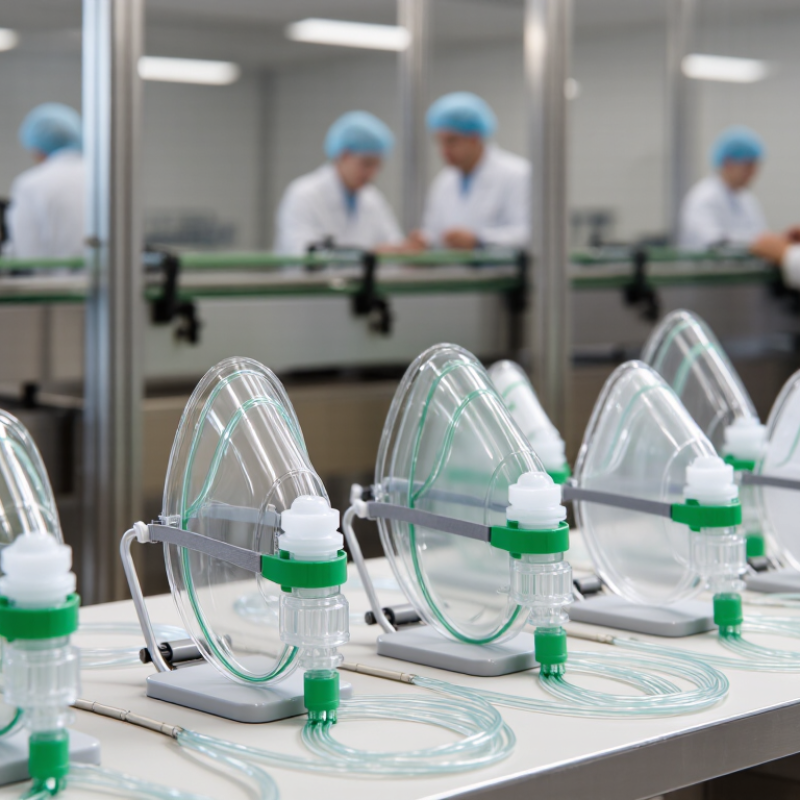
China Top 10 Medical Oxygen Mask Manufacturers?

Medical Oxygen Masks: Definition, Types, and Clinical Applications

China Top 10 Medical Oxygen Mask Manufacturers?

Medical Oxygen Masks: Definition, Types, and Clinical Applications

A medical oxygen mask delivers supplemental oxygen through the nose and mouth. It connects to an oxygen source, tubing, and flow regulator. Common designs include simple face masks, Venturi masks, non-rebreather masks, and aerosol masks. Each type supports a different clinical purpose.

Simple masks may support patients needing moderate oxygen levels. Venturi masks provide more controlled oxygen concentrations for patients with specific respiratory conditions. Non-rebreather masks can deliver high oxygen concentrations during urgent care. Aerosol masks may help deliver humidified oxygen when dryness causes discomfort. Fit matters. A loose seal reduces delivery efficiency.

Hospitals and clinics should assess mask materials, connector security, valve performance, and patient comfort. They should also review cleaning instructions, packaging integrity, and documented quality controls. A practical selection process examines manufacturing consistency, regulatory compliance, clinical feedback, and after-sales technical support. Top manufacturers should provide clear specifications and traceable production records.

Clinical staff must select flow settings according to medical assessment and local protocols. Oxygen therapy is not automatically harmless. Poor monitoring may cause dryness, skin pressure, or unsuitable oxygen exposure. Children, older adults, and unconscious patients often need closer observation. In practice, even a well-designed mask can fail when the size, flow rate, or patient condition is misunderstood. That limitation deserves more attention during purchasing decisions.

China Top 10 Medical Oxygen Mask Manufacturers? — Medical Oxygen Masks: Definition, Types, and Clinical Applications

Medical oxygen masks deliver supplemental oxygen through the nose and mouth. The chart compares commonly used mask types by their typical clinical oxygen-flow ranges; actual settings depend on the patient’s condition, oxygen concentration requirements, and clinical protocol.

Note: Flow ranges are typical clinical reference values and may vary by device design and healthcare setting. Oxygen therapy should be administered by qualified healthcare professionals.

How China’s Medical Oxygen Mask Industry Is Evaluated

China’s medical oxygen mask manufacturers should be evaluated through evidence, not catalog claims. A credible review examines material safety, oxygen flow performance, mask geometry, and connection stability.

Fit matters. The mask should seal gently without causing pressure points during extended use. Transparent materials can help clinicians observe condensation, skin color, and patient comfort.

Testing should cover different face shapes, tubing positions, and movement levels. Small design weaknesses may appear only after repeated handling.

Quality control is equally important. Evaluators should inspect incoming materials, clean-room practices, batch records, and packaging integrity.

Each production lot should be traceable through documented inspections and validated testing methods. Records matter. Independent laboratory reports can strengthen confidence, but their scope and testing dates require careful review.

Factory audits should include worker training, calibration logs, complaint handling, and corrective actions. A polished facility is not enough. Consistent evidence is more valuable than attractive photographs.

Reliable manufacturers also communicate clearly about intended use, storage conditions, shelf life, and applicable medical-device requirements.

They should provide samples for practical assessment rather than relying only on specifications. In real purchasing work, rankings can be misleading because price, capacity, and customization may distort comparisons.

A smaller supplier may offer stronger documentation, while a larger one may show uneven batch consistency. This is where evaluation becomes imperfect.

Buyers should record findings, repeat critical tests, and leave room for follow-up questions before selecting a supplier.

Profiles of China’s Top 10 Medical Oxygen Mask Manufacturers

Profiles of China’s Top 10 Medical Oxygen Mask Manufacturers

China’s leading medical oxygen mask manufacturers differ in scale, specialization, and production experience. The strongest profiles usually include large-volume medical suppliers, precision injection-molding specialists, disposable device factories, and exporters serving hospitals. Some focus on adult masks, while others produce pediatric sizes, non-rebreather designs, or adjustable oxygen delivery sets. Their product teams should understand airflow, soft facial seals, tube flexibility, and patient comfort.

Reliable manufacturers normally operate under documented quality systems, often aligned with ISO 13485 and applicable Chinese medical-device requirements. Their facilities should control raw materials, molding temperatures, assembly, packaging, and lot traceability. Experienced teams also inspect connectors and oxygen tubing manually. Small defects matter. A loose fitting may reduce confidence during treatment.

The top ten profiles also include factories with cleanroom assembly, private-label production, and customized packaging services. Some provide samples before mass production. That practice helps buyers assess mask clarity, elastic tension, odor, and skin contact. However, factory claims still need verification through audits, test records, and current certificates. No manufacturer is perfect. A supplier may offer excellent molding but limited export support, or strong documentation with slower customization. Buyers should compare evidence rather than polished presentations. Continuous improvement remains important, especially when feedback reveals pressure marks, fogging, or uncomfortable straps.

Product Standards, Certifications, and Manufacturing Capabilities

China Top 10 Medical Oxygen Mask Manufacturers: Product Standards, Certifications, and Manufacturing Capabilities

A credible manufacturer should provide more than a polished product catalogue. Its oxygen masks need documented specifications for material, tube length, connector size, oxygen flow range, and patient fit. ISO 13485 certification shows a controlled quality management system. However, it does not automatically prove that every mask performs consistently. That distinction matters.

Risk management should follow ISO 14971, while skin-contact materials may require evaluation under the ISO 10993 series. Packaging and labeling should align with applicable requirements, including symbols, warnings, batch numbers, and expiration information. Market access also depends on destination-country registration and testing rules. Certificates must be checked for scope, validity, and the exact manufacturing site. A certificate with a narrow scope may not cover oxygen masks.

Manufacturing capability is equally important. Strong facilities often use medical-grade PVC or silicone, automated extrusion, injection molding, and controlled assembly areas. Operators should inspect mask edges, ear loops, connectors, and tubing for visible defects. Practical testing may include airflow, leakage, tensile strength, dimensional accuracy, and connector security. Sterile products require validated sterilization and packaging processes. Non-sterile products still need clean handling and contamination controls.

Factory audits can reveal details that documents miss. Ask to review batch records, calibration logs, complaint handling, and traceability procedures. Sample testing is useful. Not perfect. Some manufacturers may report impressive output but provide limited evidence of process stability, so production claims deserve careful verification.

How to Compare and Select a Chinese Oxygen Mask Manufacturer

When comparing China’s top oxygen mask manufacturers, begin with product evidence, not rankings or polished websites. Request samples from several factories and inspect the mask by hand. Check soft edges, clear material, secure elastic straps, and smooth tubing connections. Ask whether the mask supports the required oxygen flow range. Small defects can cause discomfort or leakage during extended use. Ask for test reports, material specifications, batch records, and quality certificates such as ISO 13485 where applicable. Documents should match the actual product and production site.

A factory visit, video audit, or independent inspection can reveal more than a sales presentation. Look at cleanroom controls, molding equipment, packaging areas, and rejected-product procedures. Confirm production capacity using realistic monthly figures, not optimistic promises. Discuss minimum order quantities, sample approval, lead times, labeling, and carton protection in writing. A reliable manufacturer should explain how it controls size, transparency, odor, and connector dimensions. Ask for traceability from raw material to finished carton.

Do not rely on photos alone. I have seen attractive samples hide inconsistent tubing lengths. That mistake is easy to miss. Compare at least three approved samples under the same conditions, then review pricing beside quality and delivery risk. The cheapest offer may create higher inspection costs later. Communication also matters: unanswered technical questions often become larger production problems. A careful supplier accepts reasonable scrutiny and provides clear corrective actions when a sample fails.

China Top 10 Medical Oxygen Mask Manufacturers? - How to Compare and Select a Chinese Oxygen Mask Manufacturer

Rank Anonymous Manufacturer Profile Product Type Common Adult Tubing Length Typical Oxygen Flow Range Available Configurations Relevant Quality Evidence to Request Private-Label Capability Recommended Buyer Check
1 Profile 01 — High-volume disposable device supplier Simple oxygen mask Approximately 2.1 m 5–10 L/min Adult, pediatric, adjustable nose clip ISO 13485 certificate, risk-management file, biocompatibility assessment Usually available Confirm material composition, packaging validation, and lot traceability
2 Profile 02 — OEM-focused respiratory accessory supplier Non-rebreathing mask Approximately 2.1 m 10–15 L/min Reservoir bag, one-way valves, adult sizes Valve-function test, leakage test, ISO 10993 evaluation where applicable Usually available Verify reservoir capacity, valve orientation, and oxygen concentration claims
3 Profile 03 — Pediatric and neonatal product specialist Pediatric oxygen mask Approximately 1.8–2.1 m 2–10 L/min Infant, child, soft edge, low-dead-space options Dimensional inspection, material safety data, usability and fit evaluation Subject to tooling review Check facial fit, edge softness, dead space, and age-specific labeling
4 Profile 04 — Sterile medical consumables supplier Sterile oxygen mask Approximately 2.1 m 5–15 L/min EO-sterilized, individual pouch, multiple sizes Sterilization validation, residuals testing, shelf-life and package-integrity data Available with artwork approval Request sterilization records and confirm the stated expiry period
5 Profile 05 — Hospital distribution and bulk-order supplier Standard oxygen mask kit Approximately 2.1 m 5–10 L/min Mask, tubing, connector, elastic strap Incoming inspection plan, batch records, complaint-handling procedure Often available Compare carton quantity, lead time, production capacity, and replacement policy
6 Profile 06 — Custom tooling and product-development supplier Customized oxygen mask Customer specification Customer specification Custom shape, connector, color, packaging Design-control records, validation protocol, drawing and change-control system Yes, subject to minimum order quantity Define ownership of molds, specifications, tooling cost, and engineering changes
7 Profile 07 — Export-oriented medical device supplier Oxygen mask and tubing set Approximately 2.1 m 5–15 L/min Multiple connectors, multilingual labeling Applicable-market registration, declaration of conformity, technical file summary Available Confirm target-country requirements before placing an order
8 Profile 08 — Eco-material and packaging optimization supplier Disposable oxygen mask Approximately 2.1 m 5–10 L/min Reduced packaging, latex-free options Material declarations, latex-free confirmation, packaging qualification Usually available Verify that environmental claims do not compromise sterility or device performance
9 Profile 09 — Emergency and ambulance equipment supplier Non-rebreathing oxygen mask Approximately 2.1 m 10–15 L/min High-flow bag, check valves, reinforced connectors Flow, valve, leakage, tensile-strength, and connector compatibility testing Available Conduct a practical fit and valve-function test using the intended oxygen source
10 Profile 10 — Flexible low-volume and sample-order supplier Basic oxygen mask Approximately 1.8–2.1 m 5–10 L/min Small trial orders, mixed sizes, standard packaging Quality certificate, sample inspection report, production-batch identification Limited to moderate Use pre-shipment inspection and confirm capacity before scaling up
Selection note: Flow-rate ranges and tubing lengths shown above are common product specifications, not performance guarantees. Buyers should verify current specifications, applicable registration status, ISO 13485 certification, material safety, sterilization validation, labeling, and target-market regulatory requirements directly with each supplier before purchase.