The 2026 Gas Generator market is becoming more application-driven than brand-driven. Data centers, hospitals, factories, farms, and remote construction sites require different power characteristics. A single ranking cannot serve them all.
The International Energy Agency’s Gas 2024 report expects global gas demand to increase by about 2.3% annually through 2026, adding approximately 175 billion cubic meters. This growth supports continued investment in gas-based distributed generation. However, demand growth does not automatically prove that every Gas Generator is efficient or future-ready. Fuel price, emissions rules, grid access, maintenance skills, and gas quality still matter.
For continuous industrial power, high-efficiency natural-gas reciprocating generators remain strong candidates. They start quickly and handle changing loads well. Gas turbines suit larger facilities and smoother, high-volume operation. Combined heat and power systems can recover exhaust heat for steam, hot water, or drying processes. Biogas and renewable-gas generators offer another route where farms, wastewater plants, and landfills can supply local fuel.
Michael E. Webber, an energy systems expert at the University of Texas at Austin, has described natural gas as “the Swiss Army knife of the energy system.” The comparison is useful, but incomplete. Flexibility has value. So does efficiency.
The U.S. Department of Energy’s CHP market assessments also show why heat recovery deserves attention. A generator producing electricity alone may waste useful thermal energy. That missed heat can change the project economics.
This overview will compare the leading 2026 Gas Generator types by output, fuel flexibility, efficiency, reliability, and operating environment. The “top” choice is not universal. Sometimes, the practical answer is less impressive on paper.
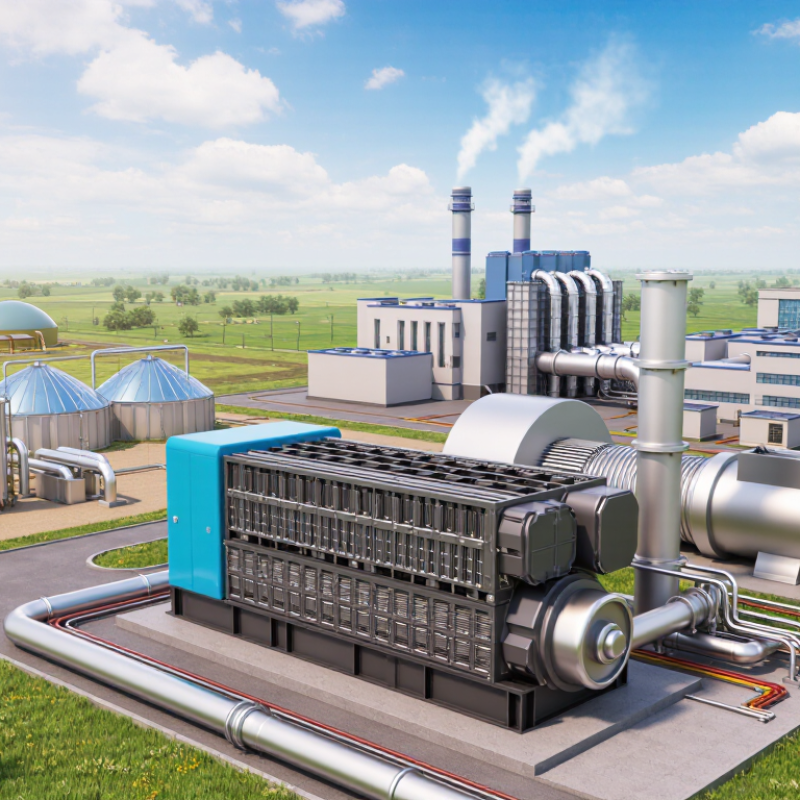
A gas generator converts fuel energy into electricity through an internal combustion engine, gas turbine, or microturbine. Its role is expanding beyond emergency backup. Hospitals, factories, farms, and data centers use these systems when grid power becomes unstable or insufficient.
The International Energy Agency’s Electricity 2024 report forecasts global data center electricity demand could exceed 1,000 TWh by 2026. Gas generators can support this growth with rapid startup and controllable output. Reciprocating natural-gas generators suit variable loads and frequent cycling. Gas turbines perform better for larger, continuous loads. Microturbines fit smaller facilities with limited space. Combined heat and power systems also reuse exhaust heat for heating or industrial processes.
The U.S. Energy Information Administration reported that natural gas supplied about 43% of U.S. utility-scale electricity generation in 2023. That figure shows why gas equipment remains important during renewable shortages and peak demand. Yet the picture is not perfectly clean. Emissions, fuel availability, maintenance quality, and methane leakage still affect real-world performance. Dual-fuel systems may improve resilience, but they add controls and operating complexity. Operators should measure heat rate, startup time, noise, service intervals, and local air requirements before choosing a type. Cheap capacity can become expensive when poorly matched.
Gas generators are best classified by fuel source, engine design, and operating purpose. The main type remains the natural-gas reciprocating generator. It uses spark ignition and suits hospitals, factories, and data facilities requiring steady power. Its compact frame allows fast installation, but gas pressure and pipeline reliability remain practical concerns. The IEA’s Gas 2024 report projected global gas demand to rise by about 2.5% in 2024, supporting continued interest in gas-fired generation.
A second group uses renewable or recovered gases. Biogas generators burn methane from agricultural waste or wastewater plants. Landfill-gas generators use methane collected from decomposing waste. These systems can reduce flaring, although gas cleaning is essential. Hydrogen-capable generators form another emerging category, but performance depends on blend limits, storage, and combustion control. Gas turbines belong to a different class. They provide high output and quick response, while reciprocating units often perform better at partial load. The boundary is not always clean. I would not classify every “low-carbon” gas generator as renewable without checking its fuel origin and emissions data. The IEA’s Global Methane Tracker 2024 estimated 120 million tonnes of methane emissions from fossil-fuel operations in 2023, highlighting the value of leak control.
Tips: Match the generator to the load profile, not only its rated capacity. Check methane content, gas pressure, standby hours, cooling needs, and local emissions rules. Request tested electrical efficiency and heat-rate data. Small mistakes matter. A 20% oversized unit may run inefficiently for long periods. Even experienced operators should review maintenance records and fuel quality before final selection.
Classifying the main gas generator technologies by typical net electrical efficiency
Reciprocating gas engines remain widely used because they offer flexible output and efficient operation at small and medium scales. Dual-fuel engines can improve fuel flexibility, while gas turbines are better suited to large, continuous-load installations. Microturbines provide compact distributed generation, and fuel cells can achieve high electrical efficiency with very low local emissions. The values shown are indicative technology ranges, not market-share data.
What Are the 2026 Top Gas Generator Types?
Comparing Power Sources, Fuel Options, and Operating Systems
Gas generators in 2026 are usually judged by output stability, fuel access, and control logic. A conventional alternator suits pumps, heaters, and larger fixed loads. An inverter system provides cleaner electricity for sensitive electronics, but its capacity may be lower. No option wins every site.
Natural gas works well where a permanent pipeline offers steady pressure. Propane stores easily in tanks and can support remote properties. Dual-fuel models add flexibility when one supply becomes unavailable. However, fuel pressure, cold-weather performance, and tank size deserve careful checking. A small tank can empty faster than expected.
That detail matters.
Operating systems create another clear difference. Manual-start units cost less and suit occasional backup use. Automatic standby systems detect an outage, start the engine, and transfer selected circuits. Advanced controllers can shed nonessential loads, monitor runtime, and report faults remotely. These features reduce stress, though they add wiring, maintenance, and failure points.
A reliable setup should match the generator’s continuous rating, not only its advertised peak. Electricians commonly test starting surges from refrigerators, wells, and air conditioners. Ventilation and carbon-monoxide protection must also be planned carefully. Never place a fuel-burning generator inside a home, garage, or enclosed room. I would not treat remote monitoring as a substitute for inspections. Sensors can miss blocked airflow, aging hoses, or poor fuel quality. Field conditions remain inconveniently important.
In 2026, the leading gas generator types serve different operating realities. Reciprocating engines remain practical for hospitals, factories, farms, and remote facilities. They start quickly and handle changing electrical loads well. Their efficiency can exceed 40% in larger units. With combined heat and power, total useful efficiency may approach 80%. That depends on steady heat demand.
Microturbines suit buildings needing compact equipment and low vibration. They produce fewer moving-part failures, but their electrical efficiency is usually lower at small loads. Gas turbines perform better in large, continuous-duty installations. They need consistent fuel quality and skilled maintenance. Biogas generators can convert digester gas into useful electricity, especially at wastewater plants and agricultural sites. Gas cleaning is essential. Siloxanes and hydrogen sulfide can damage engines quickly.
Environmental performance requires more than checking carbon dioxide output. Natural gas systems often emit less carbon dioxide than diesel units, yet methane leakage can weaken that advantage. Operators should measure fuel consumption, exhaust emissions, and maintenance losses over time. Lower nitrogen oxide emissions may require lean-burn combustion or after-treatment equipment. Those systems add cost and complexity.
Hydrogen-capable generators attract attention, but “ready” does not always mean “fully compatible.” Fuel supply, storage, flame control, and safety design still matter. A generator running at 30% load may waste fuel despite an impressive rated efficiency. This is often missed. Site measurements are more reliable than brochure figures. In practice, the best choice depends on load profile, heat recovery, local air rules, and available fuel quality. Mistakes happen. Good engineering leaves room to correct them.
What Are the 2026 Top Gas Generator Types?
Choosing the right gas generator starts with the load, not the advertised power rating. Natural gas reciprocating generators suit homes, small businesses, and standby systems. They start quickly and handle changing loads well. Gas turbine generators fit large facilities with steady demand and limited space. They usually need higher loads to operate efficiently. Combined heat and power (CHP) systems add value when a site can use hot water or steam.
The U.S. Energy Information Administration reported that natural gas produced about 43% of U.S. utility-scale electricity in 2023. This supports its strong role in dependable power generation. The U.S. Department of Energy states that CHP systems can reach roughly 65% to 80% total efficiency when useful heat is captured. However, those figures depend on operating hours, fuel quality, and proper maintenance. A neat rule can still fail. A small facility with unstable demand may waste fuel with an oversized unit.
Tips: Match generator capacity to measured peak demand, not guesses. Check gas pressure, ventilation, altitude, and transfer-switch compatibility. For hospitals or data rooms, calculate starting currents from pumps, chillers, and cooling equipment. Ask for tested performance curves at your actual load. Industry reports often show rated efficiency, but real sites rarely operate at one perfect output. Plan for inspection access, noise control, and future electrical loads. A two-generator setup may cost more initially, yet it can provide better redundancy and easier maintenance. Do not ignore local emissions and installation requirements.
| Generator Type | Typical Fuel | Indicative Electrical Output | Typical Electrical Efficiency | Key Strengths | Best-Fit Requirements | Main Limitations | Typical 2026 Application |
|---|---|---|---|---|---|---|---|
| Portable LPG Spark-Ignition Generator | PropaneLPG | 1–20 kW | Approximately 15–25% | Easy fuel storage, quick deployment, relatively low maintenance, and suitable for intermittent operation. | Temporary power, outdoor work, small buildings, emergency household loads, and locations without a natural-gas connection. | Higher fuel cost per kilowatt-hour than pipeline natural gas; limited capacity; cylinder logistics may restrict long-duration operation. | Small backup systems, construction sites, mobile service equipment, and rural applications. |
| Natural-Gas Reciprocating Engine Generator | Pipeline Natural GasCompressed Natural Gas | 10 kW–10 MW per unit | Approximately 30–42% | Fast load response, mature technology, broad capacity range, and good suitability for standby or prime-power service. | Facilities requiring reliable continuous or standby electricity where a stable gas supply is available. | Requires regular engine maintenance; performance can be affected by gas pressure, methane quality, altitude, and ambient temperature. | Commercial buildings, data centers, healthcare facilities, utilities, manufacturing plants, and microgrids. |
| Lean-Burn Natural-Gas CHP Generator | Natural Gas | 50 kW–10 MW per unit | Approximately 35–45% electrical; up to 75–90% total CHP efficiency | Uses recoverable engine heat for hot water, steam, or process heating, improving total fuel utilization. | Sites with a consistent simultaneous demand for electricity and useful heat for long operating periods. | Requires thermal loads, heat-recovery equipment, suitable space, and a more complex installation than a basic generator. | Hotels, hospitals, food processing, district energy, universities, and industrial facilities. |
| Biogas Reciprocating Generator | Landfill GasDigester GasSewage Gas | 30 kW–5 MW per unit | Approximately 30–40% | Converts locally produced renewable gas into electricity and can reduce flaring or fossil-fuel purchases. | Wastewater plants, farms, food-waste digesters, landfills, and other sites producing a consistent biogas stream. | Gas impurities such as hydrogen sulfide, moisture, siloxanes, and variable methane content require treatment and monitoring. | Renewable distributed generation, waste-to-energy projects, and biogas-based CHP systems. |
| Natural-Gas Microturbine Generator | Natural GasBiogasLPG | 30–500 kW per unit | Approximately 25–33% | Few moving parts, low vibration, compact footprint, and relatively low maintenance requirements. | Small commercial or industrial sites that value compact equipment, clean operation, and heat recovery. | Lower electrical efficiency than many large reciprocating engines, especially at partial load; may require a high-quality fuel supply. | Commercial CHP, telecommunications backup, remote microgrids, and distributed energy systems. |
| Gas-Diesel Dual-Fuel Generator | Natural Gas + Diesel Pilot Fuel | 100 kW–10 MW per unit | Approximately 35–45%, depending on gas substitution and load | Provides fuel flexibility and can continue operating when gas availability or gas pressure is temporarily insufficient. | Prime-power or backup installations where both gas and liquid-fuel resilience are important. | Still consumes diesel, has more complex controls and fuel systems, and may have higher maintenance requirements than a gas-only set. | Remote industrial sites, critical infrastructure, mining, islanded microgrids, and emergency power systems. |
| Hydrogen-Capable Gas Engine Generator | Natural GasHydrogen BlendsHydrogen | Approximately 100 kW–10 MW per unit | Approximately 35–45%, depending on engine design and fuel blend | Can support lower-carbon operation when hydrogen is available and may provide a transition path from natural gas to renewable gases. | Fuel infrastructure, storage, safety systems, blending limits, and local regulations must be evaluated carefully; pure-hydrogen capability is not universal. | Future-ready microgrids, industrial decarbonization projects, renewable-energy balancing, and critical facilities. | |
| Natural-Gas Fuel-Cell Generator | Natural GasBiogas | 5 kW–3 MW per system | Approximately 40–60% electrical; higher with usable heat recovery | Low local air pollution, quiet operation, high electrical efficiency, and suitability for continuous distributed generation. | Sites needing quiet, clean, steady power with limited local emissions and a reliable fuel supply. | Higher initial cost, slower power response than engine generators, fuel-processing requirements, and technology-specific maintenance. | Data centers, hospitals, commercial buildings, telecom facilities, and low-emission distributed-energy projects. |
| Indicative ranges are technology-level values rather than guaranteed product specifications. Actual output, efficiency, emissions, noise, fuel consumption, and operating limits depend on load profile, fuel quality, ambient conditions, altitude, maintenance, and local regulations. | |||||||