Top 10 Collagen Stimulation Products for Global Buyers
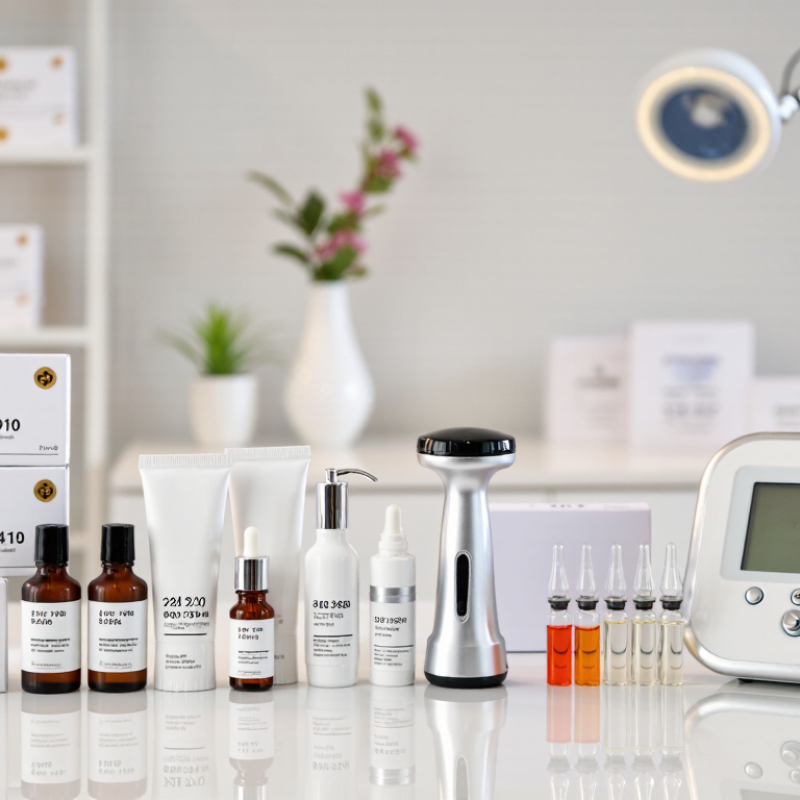
Choosing among the top 10 collagen stimulation products requires more than attractive packaging or impressive before-and-after photographs. Global buyers need evidence, ingredient transparency, manufacturing standards, and realistic expectations. A product displayed beside a clean clinic counter may look trustworthy, but appearance cannot replace clinical data or responsible sourcing.
This guide examines leading product categories used to support collagen stimulation, including professional devices, topical formulations, injectable alternatives, and home-use technologies. Each option should be assessed for its intended market, regulatory status, operator training requirements, and published safety information. Laws differ between countries. A product legally marketed in one region may require additional approval elsewhere.
Details matter. Look for batch numbers, clear instructions, storage temperatures, supplier documentation, and verifiable quality certifications. Evidence quality also varies widely. Some studies are small, short, or funded by manufacturers, so confident claims deserve careful review. Results may depend on age, skin condition, treatment settings, and aftercare.
No product works identically for every buyer. That is important. This overview combines practical purchasing considerations with research-informed evaluation, while recognizing that product rankings can never replace professional assessment. Buyers should consult qualified healthcare practitioners when a product involves clinical treatment, skin penetration, or significant health risks.
The strongest choice is not always the newest one. It is the option supported by credible evidence, lawful distribution, consistent quality, and clear communication. Even then, uncertainty remains. That is where careful judgment matters.
What Collagen Stimulation Products Are and How They Work
Collagen-stimulation products are skincare formulas designed to support the skin’s natural collagen processes or protect existing collagen. They do not replace collagen or produce instant lifting. Retinoids can encourage skin renewal and collagen-related activity, while vitamin C supports collagen formation and helps defend against oxidative stress. Peptides are also used, though evidence varies by formula. Daily broad-spectrum sunscreen matters because ultraviolet exposure can break down collagen over time.
Results depend on the ingredient, concentration, consistency, and individual skin. A richer label does not always mean better results. Irritation can also undermine a routine: redness and peeling are not proof that a product is working. Changes are gradual, often taking weeks or months, and topical products cannot address every cause of skin laxity. It is worth being cautious about bold claims; the evidence is not equally strong for every ingredient.
Tips: Start with one active product and use it as directed. Try a small patch first. Add a plain moisturizer if skin feels tight, and wear sunscreen each morning. If irritation persists, stop and seek advice from a qualified skin professional. Retinoids may not suit everyone, including people who are pregnant; ask a healthcare professional about safe options.
Top 10 Collagen Stimulation Products for Global Buyers — What Collagen Stimulation Products Are and How They Work
This overview covers commonly used product and treatment categories, not a ranked efficacy list. Regulatory authorization, availability, approved uses, and clinical evidence vary by country. Procedures should be performed by appropriately trained professionals.
| No. | Product or Treatment Category | How It Works | Typical Use | Evidence Overview | Key Considerations |
|---|---|---|---|---|---|
| 1 | Poly-L-lactic acid (PLLA) injectable | Biodegradable particles trigger a gradual tissue response that can increase collagen production over time. | Gradual improvement in facial volume loss and selected areas of skin laxity. | Clinical use is established in some markets; results develop over weeks to months and may require a treatment series. | Injection technique and dilution matter. Nodules, lumps, and inflammatory reactions are possible; it is not readily dissolved with an enzyme. |
| 2 | Calcium hydroxylapatite (CaHA) injectable | Microspheres provide structural support; the carrier gel gives an immediate effect while the material can also promote collagen formation. | Selected facial folds or contouring; diluted formulations may be used for skin quality in some markets. | Supported by clinical use for specific indications, but approved uses and injection approaches differ by jurisdiction. | Not suitable for every facial area. Vascular complications and nodules are potential risks; it is not reversible with hyaluronidase. |
| 3 | Polycaprolactone (PCL) injectable | Biodegradable particles provide support and are intended to encourage collagen formation as they break down. | Facial contouring or volume support where locally authorized. | Evidence and market availability are less uniform than for some established filler categories; duration depends on formulation and individual factors. | Check local authorization and product-specific instructions. It is not readily reversible with hyaluronidase; injection-related complications can be serious. |
| 4 | Polymethylmethacrylate (PMMA) microsphere filler | Non-absorbable microspheres remain in tissue; surrounding tissue forms collagen around them. | Long-term correction for specific indications in markets where authorized. | Use is indication-specific and limited by its permanent nature; it is not interchangeable with temporary fillers. | Permanent material can be difficult to remove. Infection, lumps, and delayed inflammatory reactions are important risks; careful patient selection is essential. |
| 5 | Absorbable PDO lifting threads | Inserted threads provide temporary mechanical support and may prompt a local healing response as they dissolve. | Selected cases of mild tissue laxity, depending on thread type and local practice. | Evidence for collagen-related benefits and lifting durability varies; outcomes are generally less predictable than surgical lifting. | Possible complications include bruising, infection, thread visibility, dimpling, or migration. Requires appropriate training and sterile technique. |
| 6 | Conventional microneedling device | Fine needles create controlled micro-injuries that activate wound-healing processes, including collagen remodeling. | Selected concerns such as acne scarring, uneven texture, or fine lines. | Clinical studies support potential improvement for some concerns; results typically require multiple sessions and vary by device and technique. | Temporary redness and pinpoint bleeding can occur. Infection, scarring, or pigment changes are possible, especially with poor technique or unsuitable skin conditions. |
| 7 | Radiofrequency microneedling device | Needles deliver radiofrequency energy into targeted skin depths, heating tissue to promote remodeling and collagen production. | Skin texture, selected acne scars, and mild skin laxity. | Studies report improvement for some indications, but outcomes depend on settings, treatment plan, and patient factors. | Redness, swelling, burns, scarring, and pigment changes are possible. Device settings and operator training are important safety factors. |
| 8 | Ablative fractional laser | Creates microscopic columns of controlled skin injury, prompting tissue repair and collagen remodeling while leaving surrounding skin intact. | Selected acne scars, wrinkles, and sun-damaged skin. | A well-studied option for resurfacing; treatment intensity affects results, healing time, and risk. | Recovery can involve several days or longer of redness and skin healing. Infection, scarring, and post-inflammatory pigmentation are possible. |
| 9 | Non-ablative fractional laser | Heats targeted skin zones without removing the entire surface layer, stimulating gradual dermal remodeling. | Mild-to-moderate photoaging, uneven texture, and selected scars. | Can improve selected concerns over a series of treatments; effects are generally more gradual than with ablative resurfacing. | Usually less surface disruption than ablative treatment, but temporary redness, swelling, and pigment changes can still occur. |
| 10 | Topical prescription retinoids | Retinoids influence skin-cell turnover and signaling pathways associated with collagen maintenance and photoaged skin repair. | Long-term management of photoaging and other approved skin conditions, depending on the medicine and country. | Clinical evidence supports improvement in some signs of photoaging with consistent use; benefits develop gradually. | Irritation, dryness, and sun sensitivity may occur. Prescription status and pregnancy-related precautions vary by active ingredient and jurisdiction. |
Related Posts
-
What is Non Surgical Aesthetics and How Does It Work?
-
Top Personalized Skincare Products to Boost Your Global Sales?
-

Best Anti Aging Treatments That Actually Work?
-

2026 Best Skin Tightening Solutions for Global Buyers?
-

2026 Best Wellness Treatments for Global Buyers to Explore
-

Discover Top Beauty and Wellness Trends from China Market?